
An interview with 2025 Curatorial Resident Serena JV Elston ahead of the opening of the group show she curated on October 30, 2026 at Chicago Artists Coalition. This spotlight series aims to serve as an intimate introduction to our residents and their work through a Q&A-style interview. Interview originally conducted on August 10, 2026 by Dana Randall, Communications and Alumni Relations Manager at Chicago Artists Coalition.
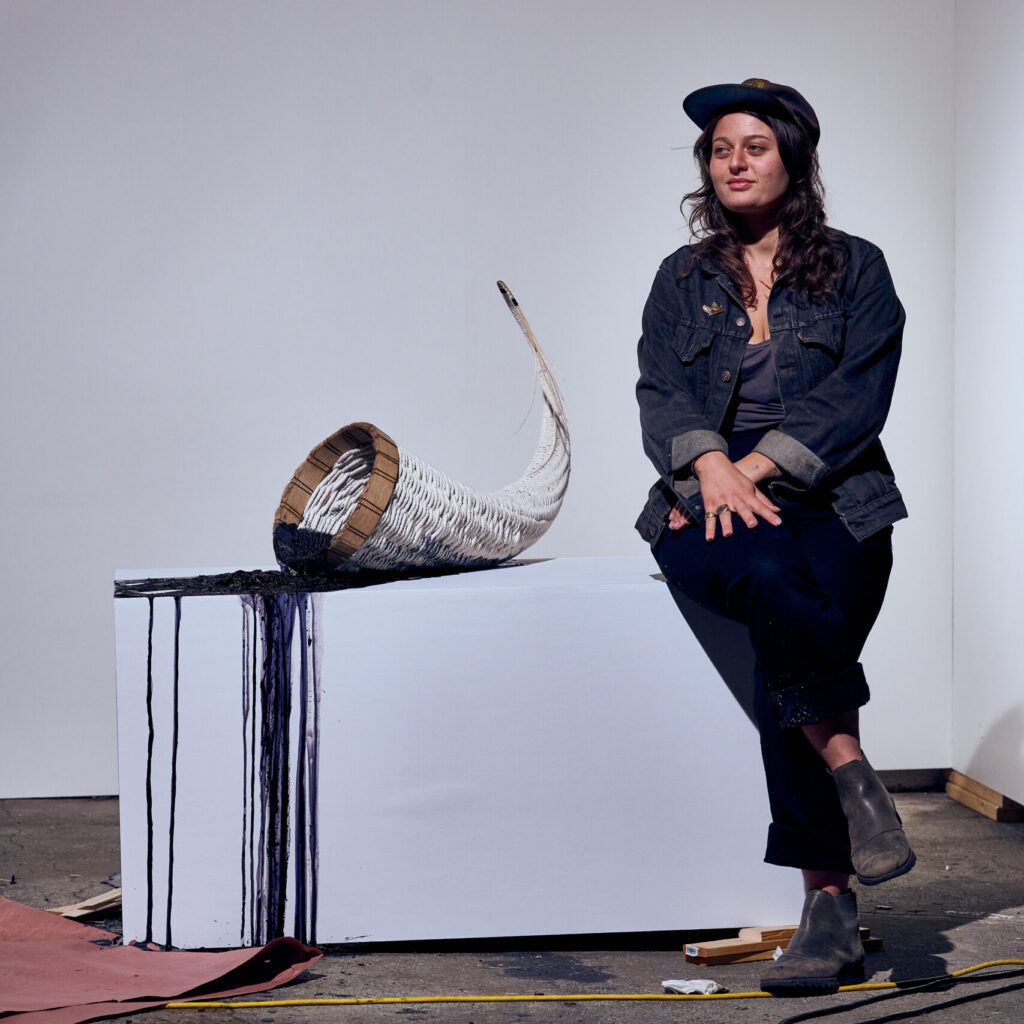
Q: How do you approach building a new exhibition from concept to installation?
A: Often I’m functioning as both a curator and an artist, but it always starts with research for me. I generally will block out maybe a month dedicated to research where I’m not in the studio. I’m not doing anything else. I create a partition in my calendar and in my headspace to immerse myself in a body of research. I will read or reread things to bring them to the forefront of my mind and start developing these lines of investigation.
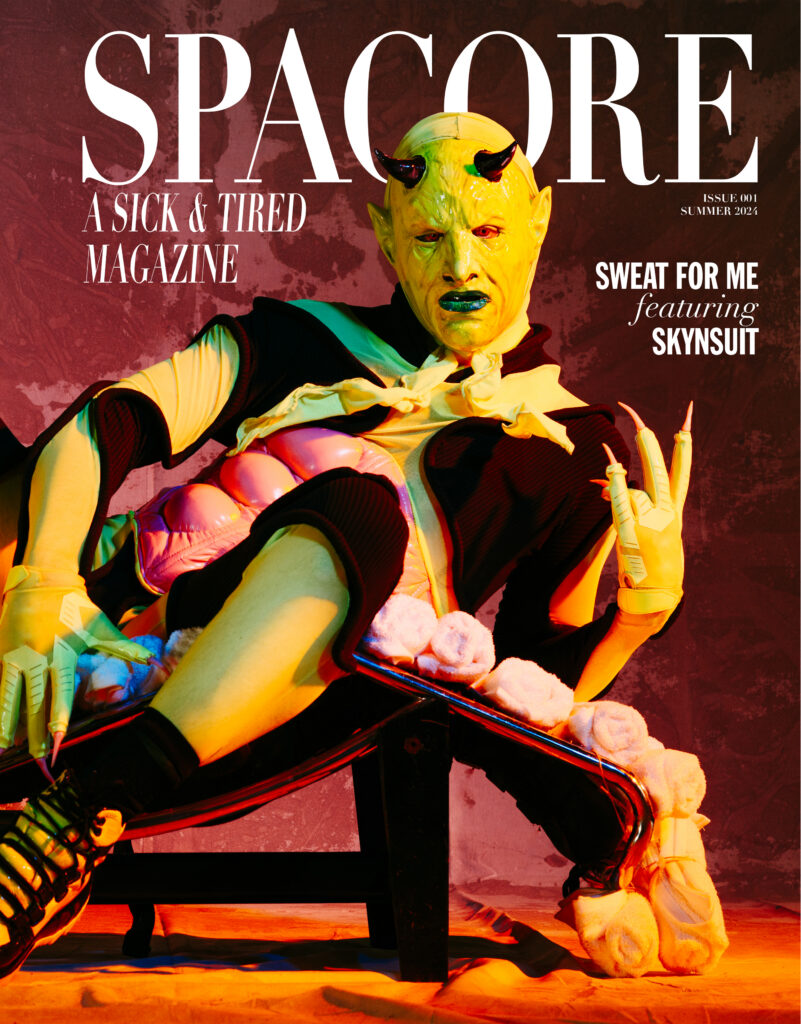
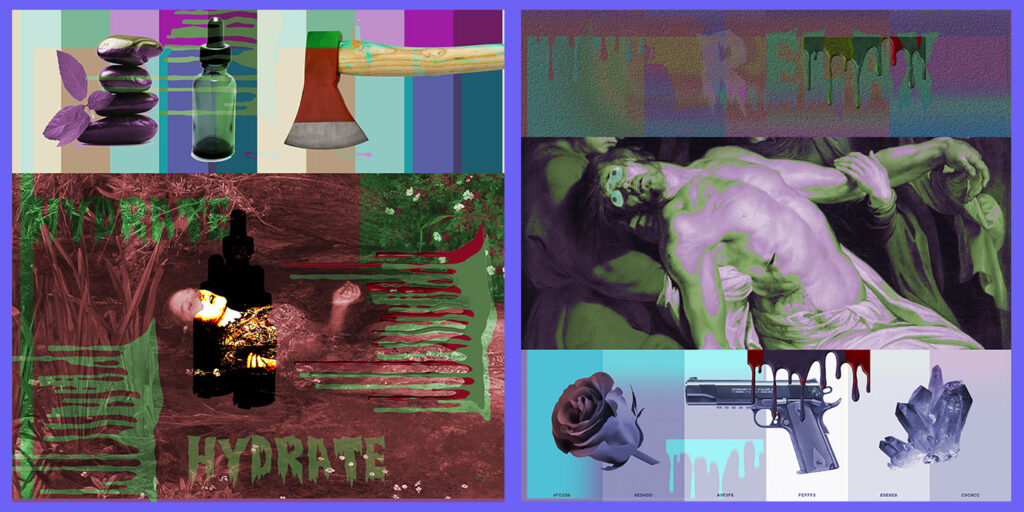
From here, I start to create loose narratives that eventually develop language. In SPACORE, this process produced a visual language, which was incredibly very helpful to communicate to other artists and venues what we were trying to do. The co-curator Zach Pelham and I made ten initial images pairing annoying ‘wellness’ words like gratitude, hydrate, and cleanse with historical artworks with an overlay of spa aesthetics and horror motifs. These perfectly communicated the complex contemporary perversion that is wellness capitalism, which is the central point of critique in SPACORE.
Q: How has your work evolved since being in the CAC residency?
A: My background is in architecture and fabrication, which are professions that require a very specific type of communication like spreadsheets, schedules, and technical drawings. Working with other artists and exhibition spaces is generally a more laissez-faire process, but then you’re dealing with installation the night before. I can’t do that, and I don’t want to. I’m a working mom with limited free time. CAC focuses on professionalization for moving through the art world. This has been very legitimizing for me to lean into my skill set from my background, and has helped me navigate landing some exciting museum exhibitions because I was prepared using advice from their professional development talks.
Q: What are some of your biggest influences? Where do you find inspiration?
A: My inspiration comes from social and political critique of final-stage capitalism and the experience of having a body that is deemed disabled under that regime. As both a curator and an artist, this is how I enter the dialogue at any moment, and it’s an undercurrent in everything that I do.
Q: Do you have a favorite medium to work with? What about them speaks to you?
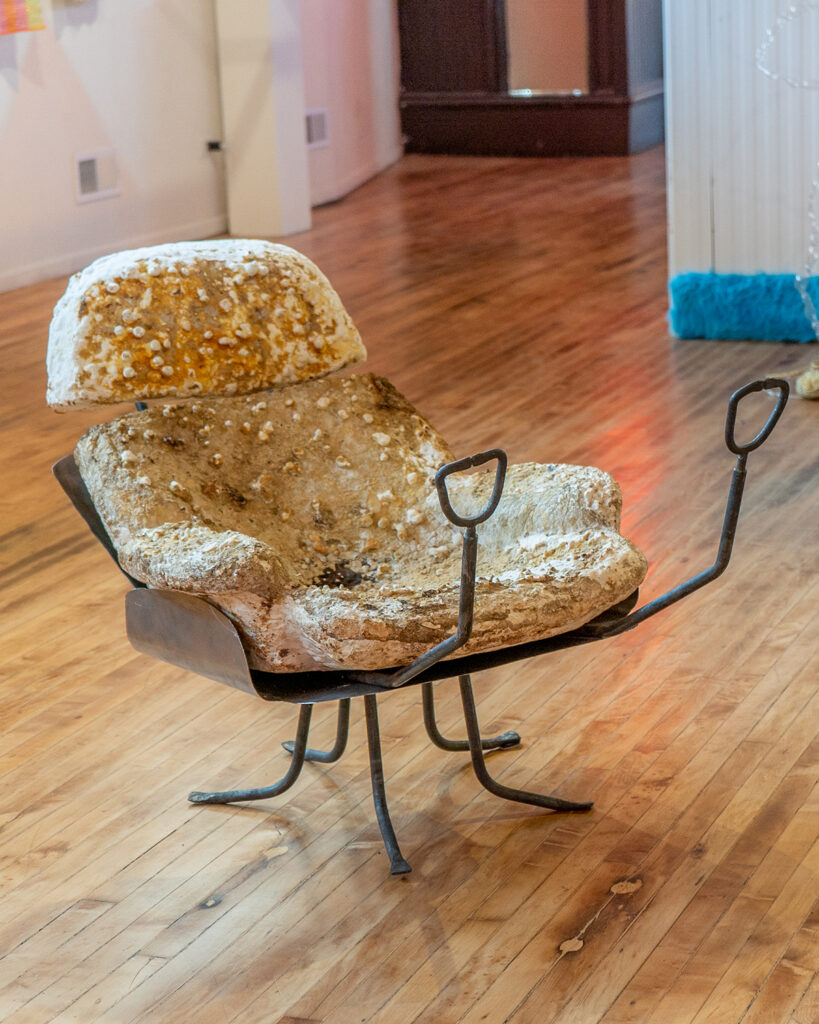
A: Well, that’s an easy one: sculpture. Working three-dimensionally has through lines of social-political critique; that’s the work I’m drawn to, and that’s the work I make.
Q: How do you think about using exhibitions to foster dialogue about social or contemporary issues?
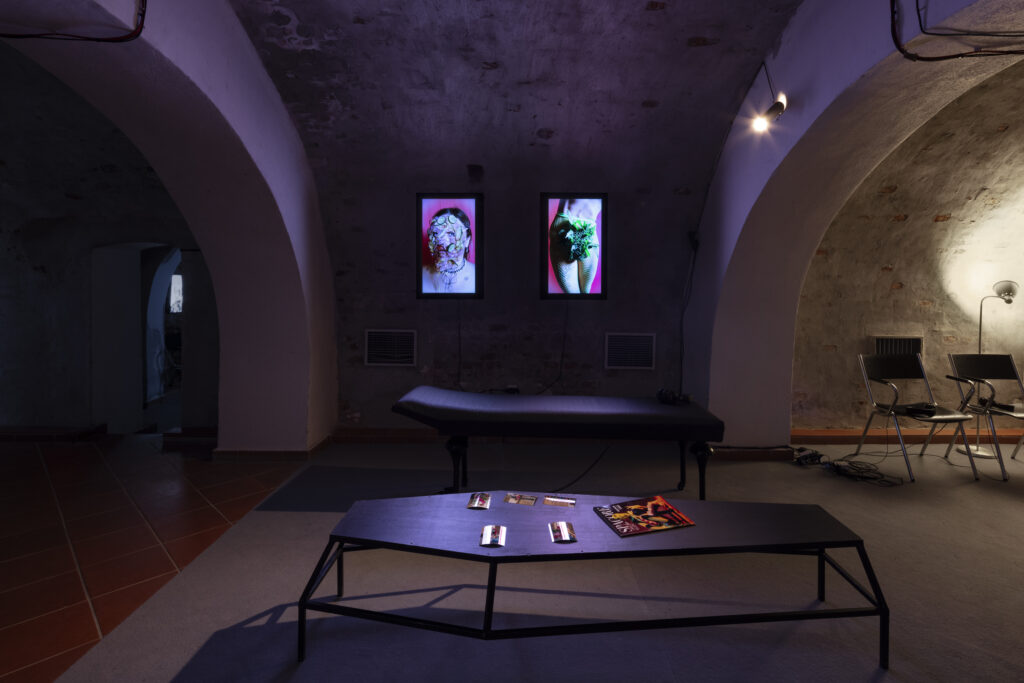
A: Envisioning a space for an exhibition can be a really great opportunity to offer visual language to really ubiquitous experiences that people have. During our installation of SPACORE, at Co-Prosperity we’d go to one corner store all the time, and there was this really cute abuela working there, and she asked one day, “Why are you here all the time? You’re eating here twice a day. Why don’t you go home?” And told her how I was installing a show nearby. She responded with, “What is that, an art gallery? What are you doing? Are you painting over there?” And I explained that no, I wasn’t painting, but I asked her, have you ever been sick? Have you ever been poor? Have you ever experienced having to wait for care, or fighting your insurance company for coverage that you pay them for? She said yes, and then I told her that was what our show was about, and she was excited to come check it out.
Making accessible curatorial work is an important way to foster dialogue and help frame very really and present contemporary issues affecting everyone, especially those that are not usually interested in art. I hope that the locals who came to see our show in Bridgeport go, “Wow, this is totally SPACORE”, the next time they have to wait for six hours to be triaged at the ER.
Q: In keeping with our values, one thing we want to do is cultivate a community of knowledge-sharing. What is something you would encourage other curators to learn about? What is something that made a difference in your career?
A: I am currently the Special Projects Director for Urban Rivers, and I can speak to the work I’ve been doing with the interns this summer. Regularly, our interns would come to me asking “Is this possible? Can I make it?” And it’s not my job, nor is it anybody’s job, to ever say no. It’s more like, “Well, I’m going to give you a skill so that you can figure out if this is something that you want to take on.” I did an hour-long demo on SketchUp. And I said, “All of you must draft your ideas because I can’t understand what you’re drawing on paper.” Now they have to think about the thickness of the material and dimensioning of what size it comes in.” Two days later, they come in with a SketchUp file full of idea variations to talk to me about, and they’re psyched. They learned this powerful skill that helps them better understand what they are doing and helps them communicate to others. Many of them are in environmental studies and are trying to design new things for incredibly niche use cases, and that makes me so excited when you’re able to communicate a skill set that helps with visual communication of something that’s never existed before. This is one of my favorite roles as a curator, being the instigator, offering my skills from my architecture and fabrication background to give support to an artist and their projects.
Q: Do you have a personal philosophy relating to your practice or your life?
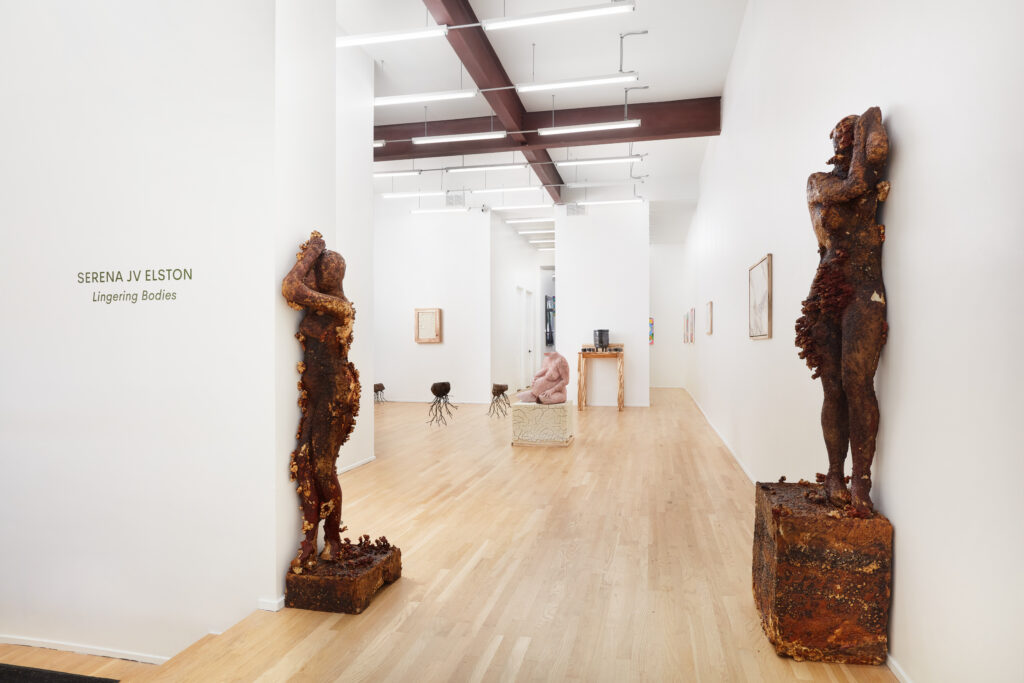
A: My personal philosophy is, if I’ve never done something before, I’m learning, and I like the people I’m doing it with, I will 100% always say yes. I think that’s very indicative of how I move through the world at any point in time. I could easily say, okay, I’m going to establish myself as an artist or curator who does this one thing, but that sounds terribly boring and lazy to me. I’m always wanting to meet awesome new people and do new things. And I think that’s what’s cool about working with a group of artists; I don’t know what they’re going to do or where it will lead. We’re going to find out together.
Website: serenajve.com
Instagram: @serenajve
You can meet Serena and learn more about her work at the group show opening on Friday, October 30, 2026 from 5-8pm at Chicago Artists Coalition featuring Mauricio López F., Gabriel Moreno, and Pablo Lazala Ruiz.