An interview with 2025 Artist Resident Gabriel Moreno ahead of his group show opening on October 30, 2026 at Chicago Artists Coalition. This spotlight series aims to serve as an intimate introduction to our residents and their work through a Q&A-style interview. Interview originally conducted on July 22, 2026 by Dana Randall, Communications and Alumni Relations Manager at Chicago Artists Coalition.
Q: Do you have any common themes running through your most recent works in progress?
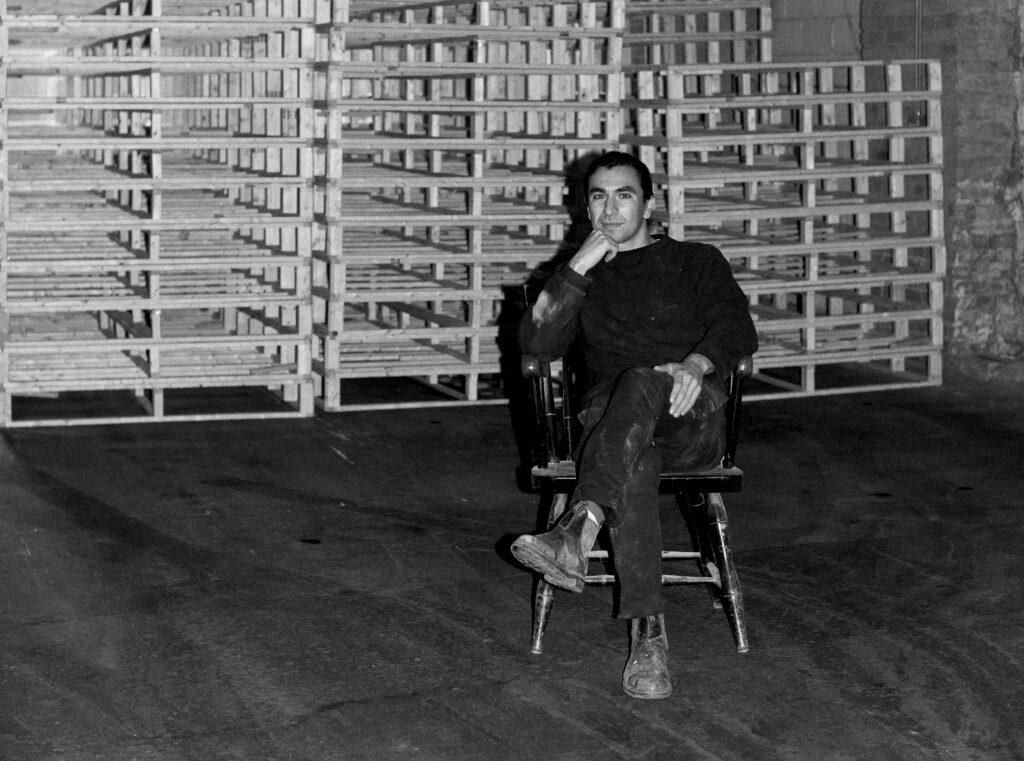
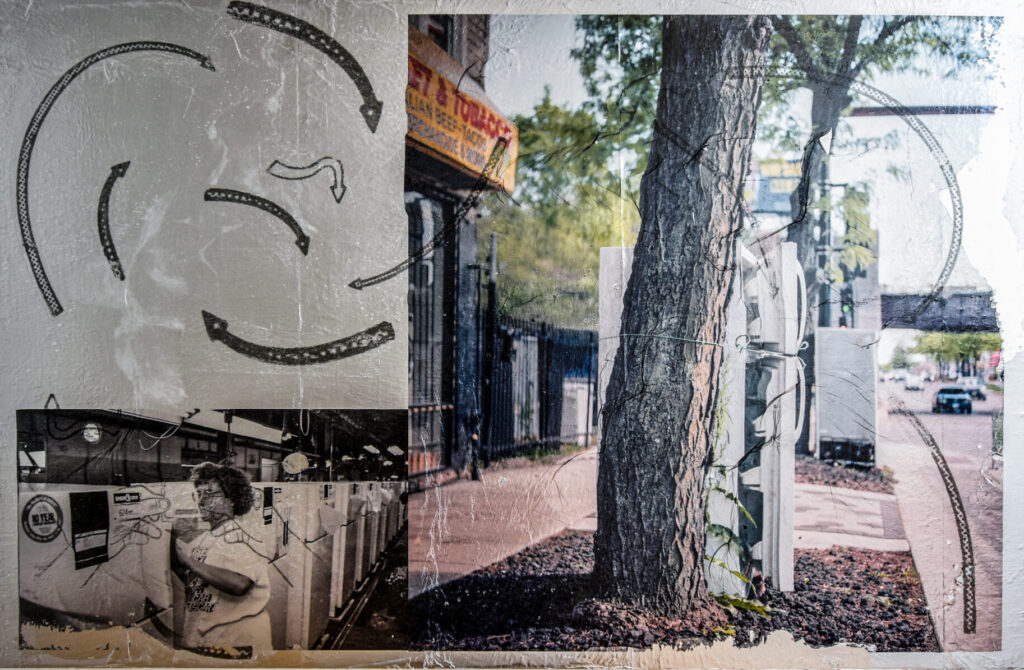
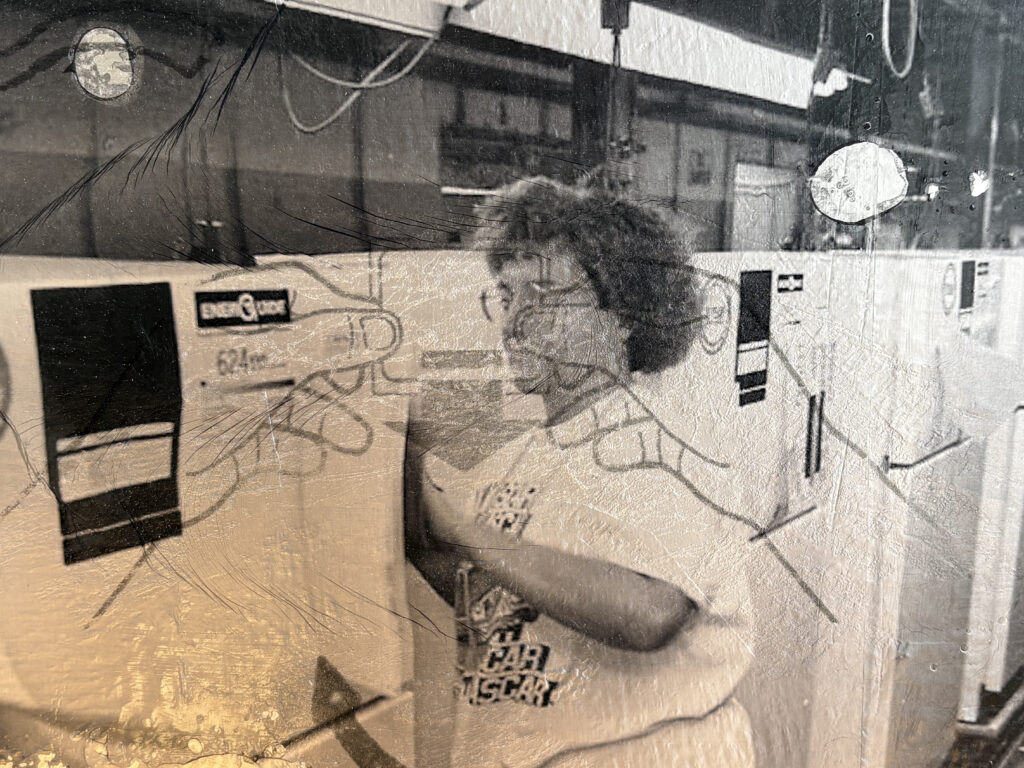
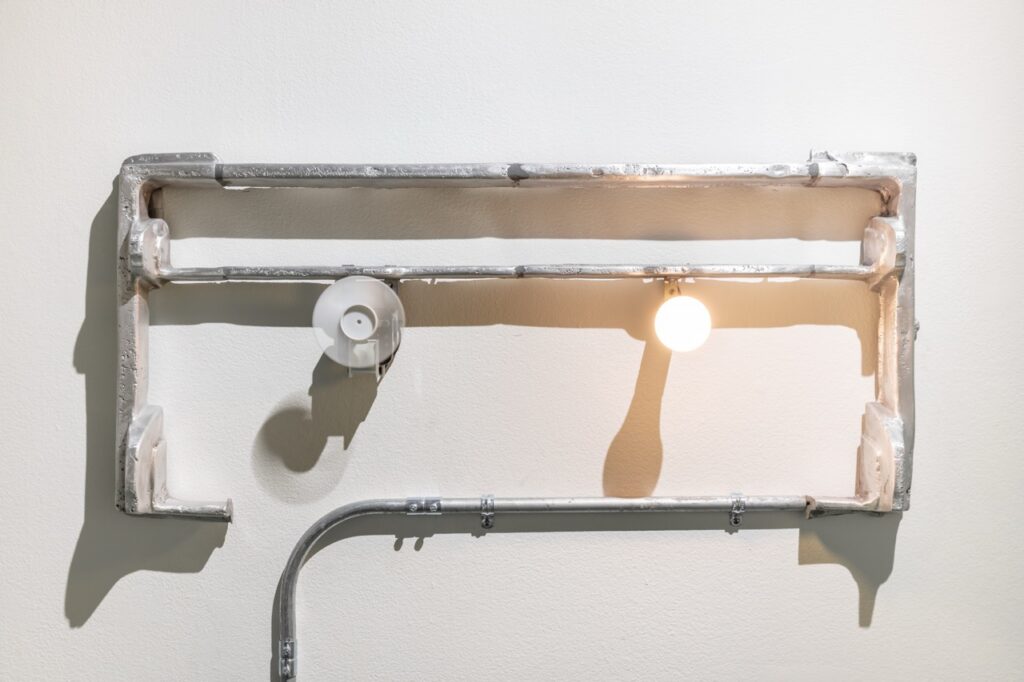
A: A major theme in my work right now is things coming together and things coming apart; what I think of as assemblage. I’ve been thinking about this show in terms of objects being dissected and expanded, and how industrial systems have been organized in similar terms. The socio-historical content I’ve been working with are stories of 19th century industrialization, particularly the meatpacking disassembly line in Chicago as a precursor to the 20th century assembly line. For years I have been looking at the departure of a refrigerator plant from the region where I grew up. There are metaphors of preservation, and the failure of it, that came from that moment. This is one example of a broader industrial history that I see riddled with unsustainable systems supporting one another, creating a kind of paradoxical longevity. To bridge 19th century meat packing, 20th century factory production, and 21st century industrial exodus… this arc is a space for seeing how desire, consumption, preservation, and death mobilize each other.
The means I’m using to work through these themes are drawing and transfer work. These have been ripe for thinking through how things touch one another, changing all entities in contact. Coming to see how these parts are of a whole is what the practice aims for.
Q: How has your work evolved since being in the CAC residency?
A: My process evolved a little bit where I’m now having a lot more fun just doing small tests, iterations, and testing a lot of things out. It feels like it’s helping things move at a much more lively pace. So I see it showing up in the work where I’m working faster, but I’m also seeing more movement across works and in the practice.
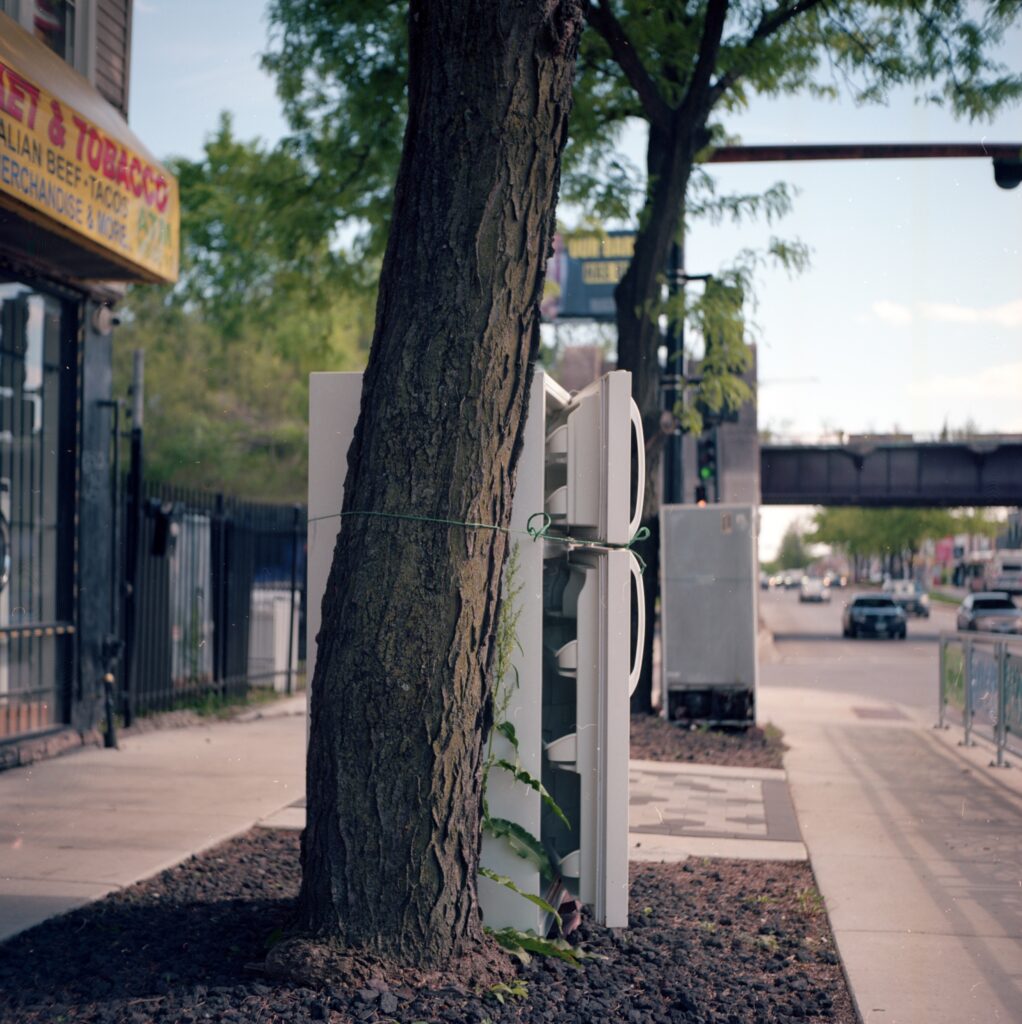
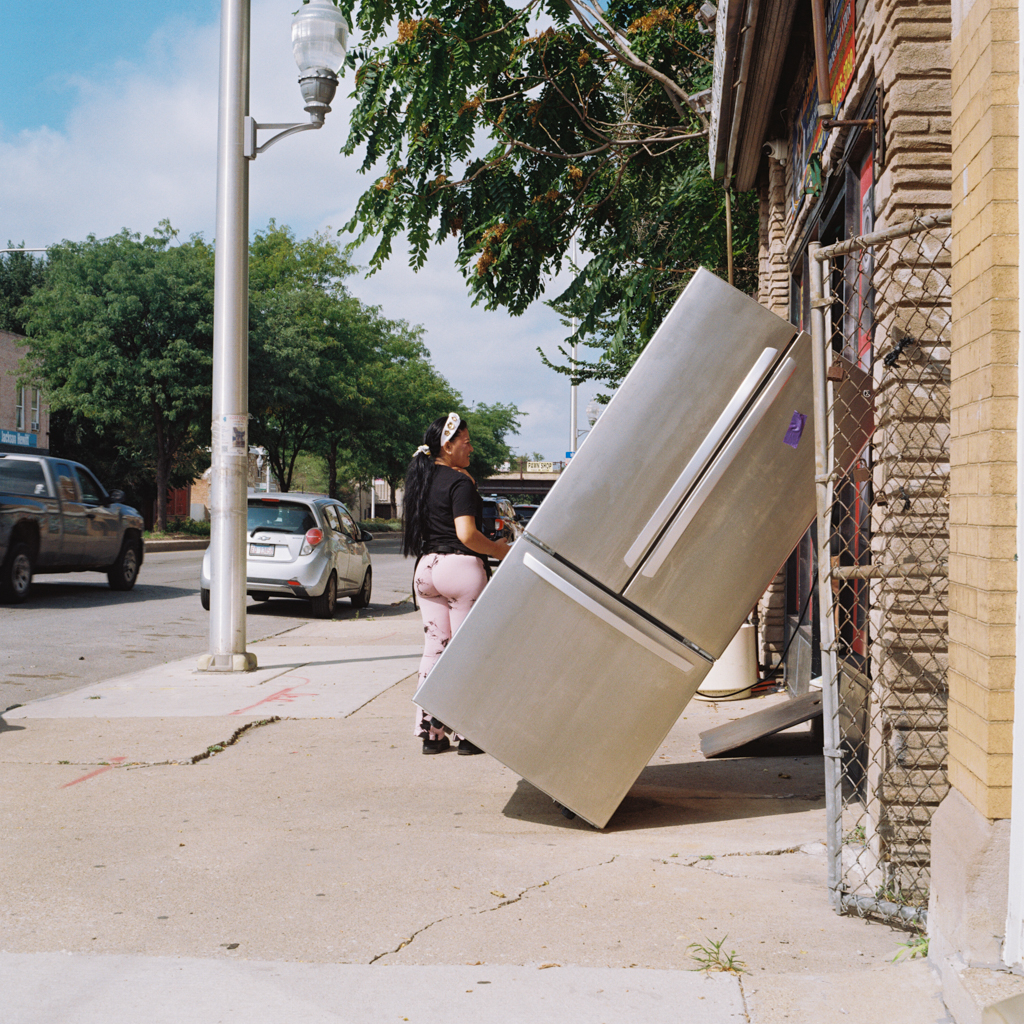
Before, I was working in sculpture a lot. Sculpture tends to be a slower process. You have a refined set of finished objects that are all heavily controlled in some ways. And I’m finding things are loosening up and becoming more dynamic. This for me means finding new ways to reflect the parts of the world that I’ve always had simmering in my mind, but have not had the forms for integration into the practice. So the images of refrigerators in the street, the people working with them, factories, landscapes… all that stuff is now showing up together intentionally and explicitly.
Q: What are some of your biggest artistic influences? Where do you find inspiration?
A: I always keep my eyes open for moments in the built environment that feel very peripheral or meant to be overlooked. That’s one source of inspiration, one source of materials for me, because that dynamic of being very visible and thus very hard to see because of its ubiquity is interesting to me.
I’m also always curious about history too. History can be one of those things that’s incredibly obvious, but also really hard to see until you start pulling on threads and trying to look at what brought us here. The things I’ve been reading to help see these histories better are often American political debates, liberal political philosophy, modern economics, market histories, and technological histories. But I’m essentially keeping my eye open for what gives that “ah-ha” moment which illuminates why and how we’ve inherited the world that we’re living through today.
Q: Tell me about your favorite mediums. What about them speaks to you?
A: I’ve loved sculpture for a long time. Ceramics is the thing I fell in love with first, mostly because it’s super tactile and rich. The material always has an identity of its own that is a guide towards what it is willing to become. Sculpture is much the same process for me.
Photography is newer, but it’s helpful as a contrasting tool for “note taking”. Over time these observations accumulate and prompt curiosity.
Q: Do you have a favorite time of day to create? How does the time you find or choose to make influence your practice?
A: That changes a lot. When I have time, it’s great to do it whenever I can. The mornings are always a pretty special time for me though. Normally, I spend that time thinking about the things I want to enter the studio with so that when I’m in the studio, I can tinker and play and run with it. But the really early morning brainstorming where the world is quiet and stuff is fresh is one of my favorite times to incubate.
Q: In keeping with our values, one thing we want to do is cultivate a community of knowledge-sharing. What is something you would encourage other artists to learn about? What is something that made a difference in your career?
A: I think about the phrase “majoring in the minors” a lot because it annoys me. I think it’s really important for artists to major in the majors, meaning to study art and think about what in the world this category of human activity is. It’s easy to believe that the way art history, or criticism, or theory talks about art is art itself. But it’s not. I find clarity in going to the source directly and prioritizing feelings. Let the art and your reactions be weird and resist the categories it’s put into, to see it on its own terms outside of the art historical framings that are placed upon it. Once that is done, all the other stuff can become useful.
That said, I’ve recently been spending time looking at Native American art. Classical mythology too. In both cases art is almost always contextualized within stories, and the structure of the art and the stories are fascinating to me.
Q: Do you have a personal philosophy relating to your practice or your life?
A: How we come to live together, and how we live with the world, seems to me to be the whole game we’re trying to play.
So I try to be less judgmental, less prescriptive. I try to be more sensitive and responsive to people, traditions, and ways of knowing that seem to have figured this out and can help me in this pursuit.
Surprisingly though, something I keep returning to is the act of refusing to accept the world as is. I see efforts to erase, quarantine, or remove a subject from the world because it is uncomfortable or seems wrong. There is often a perseverance, and fight, to push our own contradictions to the periphery. This seems to be a kind of ironic problem worth studying and finding a way to be present in.
Art for me is less about building the world I want, or getting rid of things I don’t want. It is more about responding to the world as it is, embracing the dynamics of destruction and creation. The world is already more miraculous than anything I could build, and I’m a part of it. I want to find out what I can make of that.
Website: gabrielgranatmoreno.com
Instagram: @ga_beh
You can view Gabriel’s work at his group show opening on Friday, October 30, 2026 from 5-8pm at Chicago Artists Coalition alongside Mauricio López F. and Pablo Lazala Ruiz, curated by Serena JV Elston.